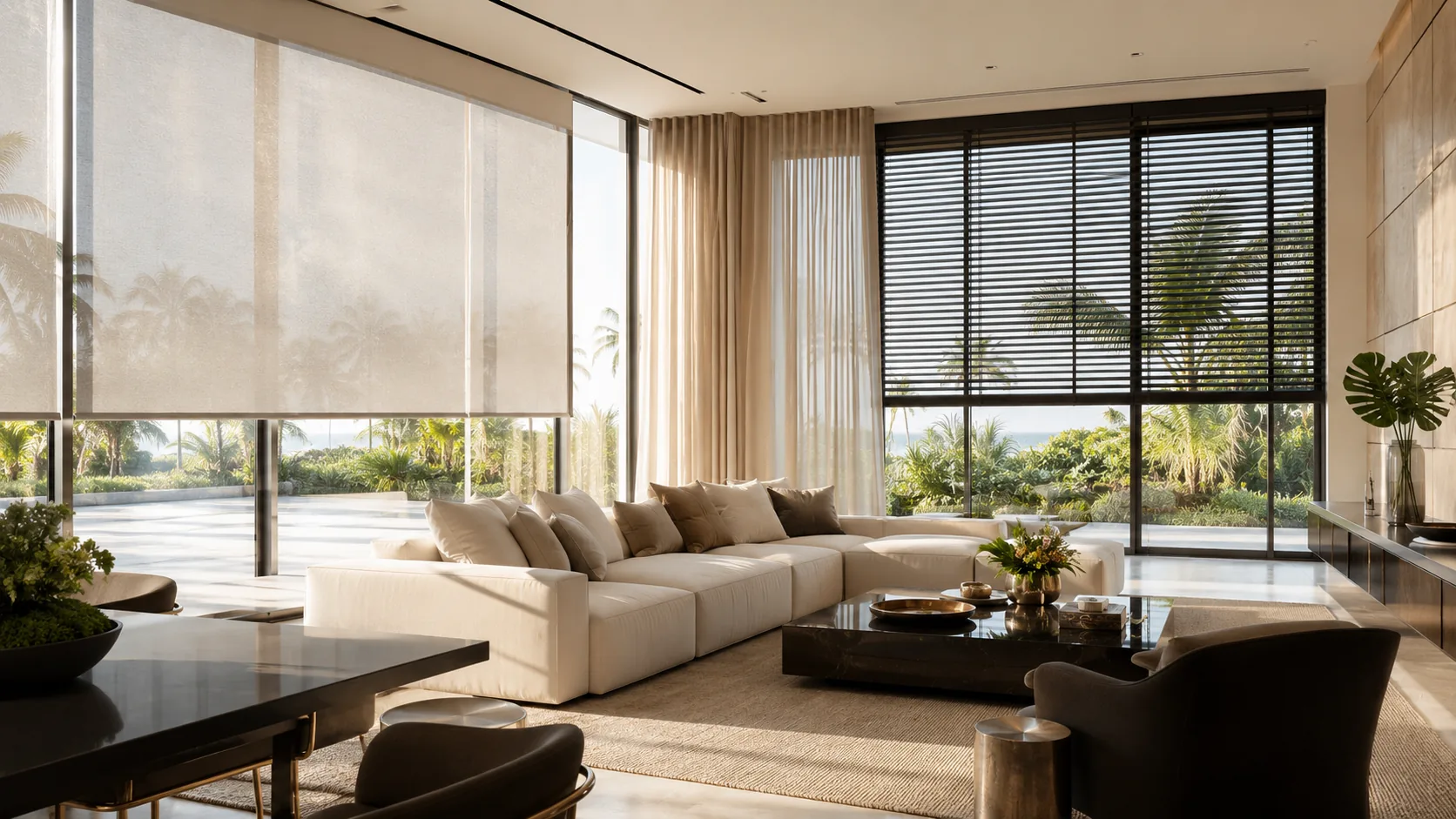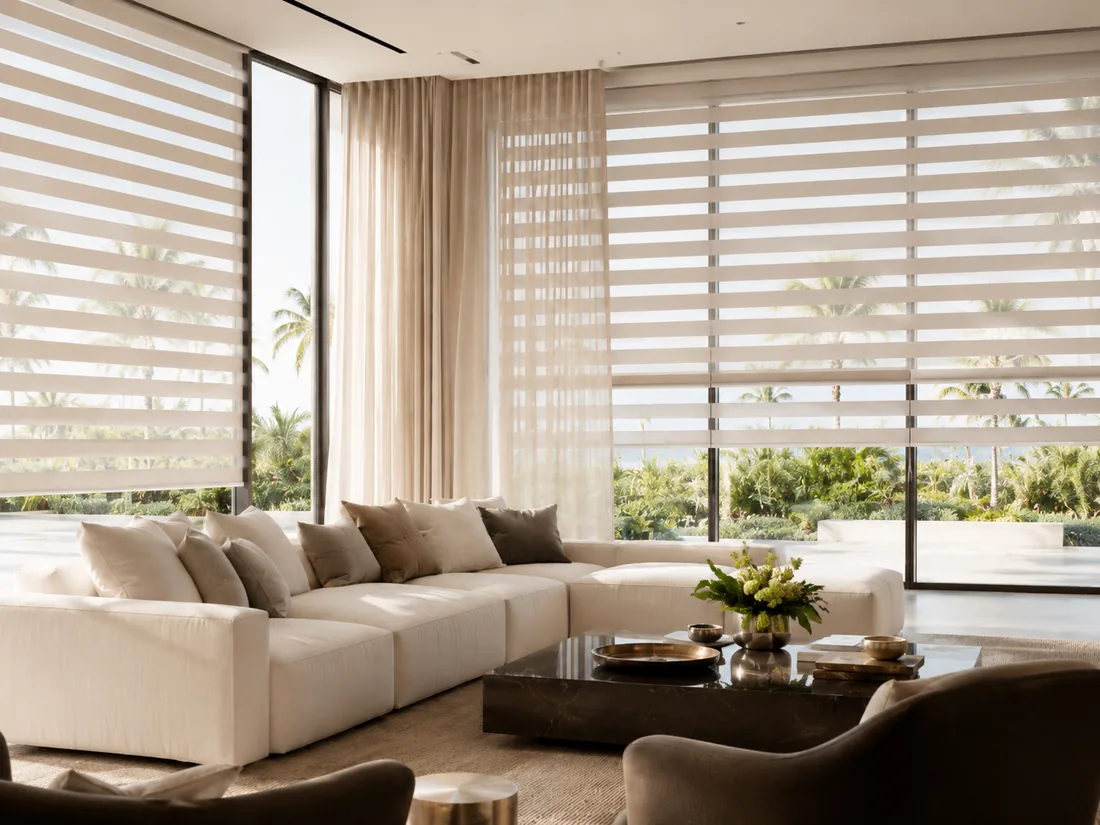
Sliding glass doors create a different design problem from ordinary windows. The covering must manage a broad area of glass while allowing frequent passage to a patio, balcony, pool, or backyard. The best solution depends on traffic, stacking space, view, wind exposure near the opening, and desired style.
Vertical blinds remain the practical benchmark
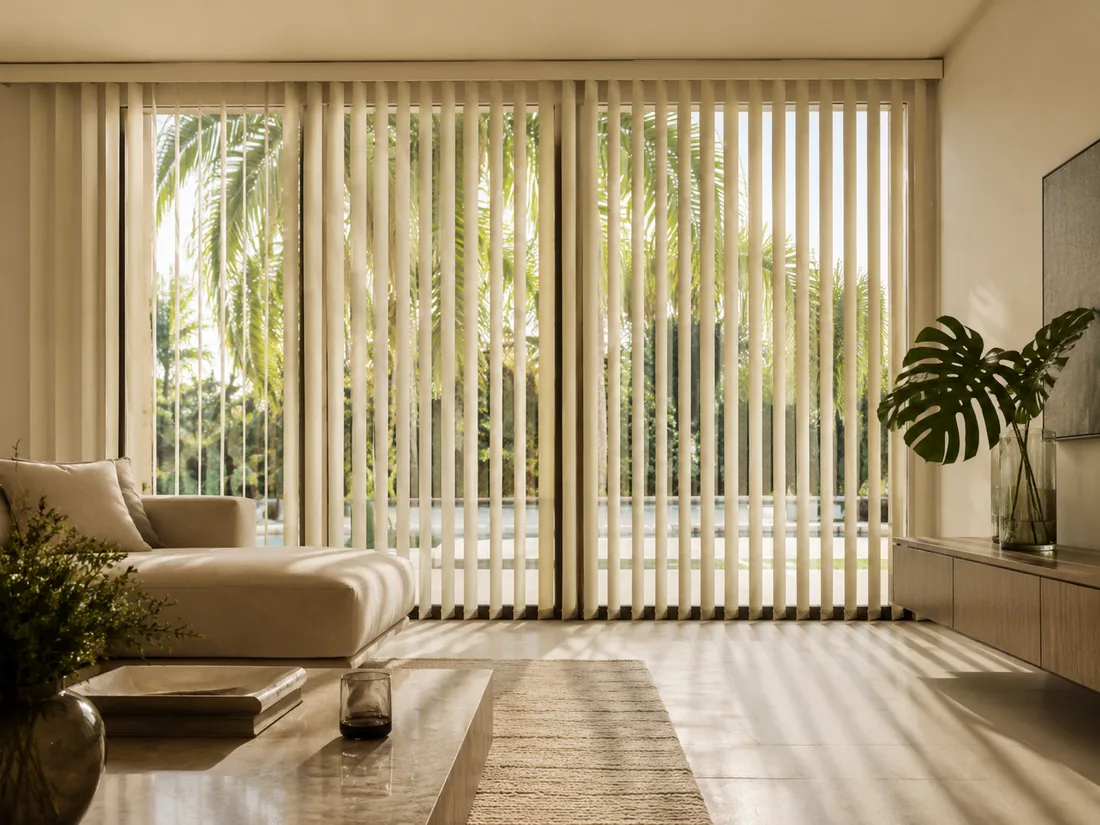
Vertical blinds rotate for light control and stack to one side or split from the center. That movement matches the direction of a sliding door, which makes access simple.
Updated textures, colors, vanes, and headrails can produce a cleaner result than older builder-grade systems.
Roller shades create a cleaner architectural look
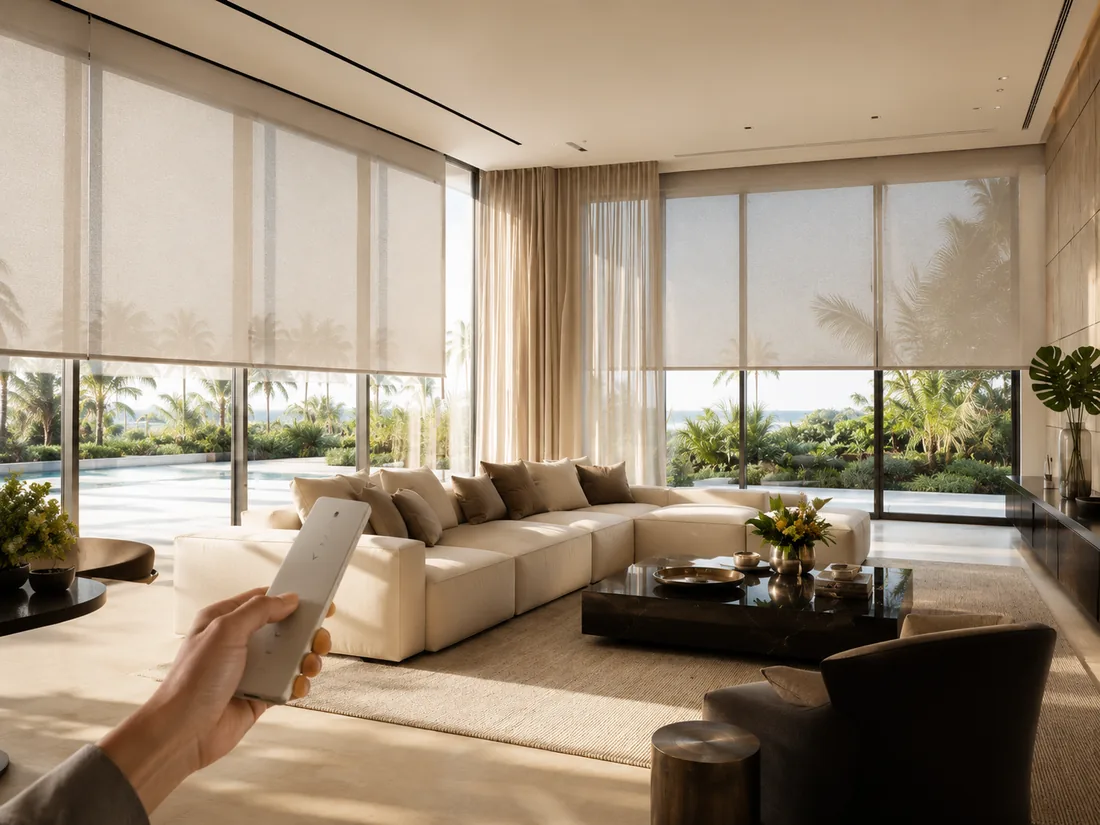
A wide opening can be divided into aligned roller shades. This provides a minimal appearance and allows individual sections to be raised when access is needed.
The tradeoff is that a lowered roller shade blocks passage until that section is raised. Alignment and gap planning are critical.
Panel-style systems suit broad openings
Sliding panels use large fabric sections that move horizontally. They can create a softer, more contemporary appearance and coordinate with roller shade fabrics used elsewhere.
They require enough side space for the panels to stack and should be specified around the active door panel.
Motorization can simplify large installations
Motorized roller shades are useful where multiple large shades should move together. They can be scheduled or controlled without reaching across furniture.
Motorization does not eliminate the need to plan door access. The shade layout should follow the traffic pattern.
Account for handles, trim, and floor conditions
Door handles, frames, ceiling height, soffits, baseboards, and uneven floors affect clearance. Vertical systems also need enough space for vanes to rotate without striking handles or furniture.
Professional measurement is especially important because small clearance errors become obvious across a wide opening.
Choose around real daily behavior
A formal room with rarely used doors can prioritize appearance. A family room with constant patio traffic needs fast, forgiving access. A rental property may prioritize easy cleaning and replaceable components.
The best product is the one that still works after the novelty of installation is gone.
Map the traffic path before selecting a product
Stand inside the room and identify which door panel opens, which side people approach from, and where furniture creates a narrow passage. The stack direction should support that movement. A vertical blind that stacks over the active panel or a roller shade that must be raised every time someone steps outside will become frustrating quickly.
Homes with children, pets, pool access, or frequent entertaining need simpler and more durable operation than rarely used formal spaces. Daily traffic should carry more weight than a showroom photograph.
Plan for airflow and movement
Open patio doors create airflow that can move lightweight fabric and vertical vanes. Hold-down hardware, bottom weights, product position, and normal door-opening habits should be discussed. No indoor treatment should be expected to remain perfectly still in a strong cross-breeze, but the system can be chosen to reduce noise and unnecessary movement.
Furniture, floor vents, ceiling fans, and door handles also affect performance. A measurement visit should review the full operating area, not just the glass dimensions.
Compare long-term maintenance
Individual vertical vanes can often be cleaned or replaced without replacing the entire system. Roller and panel fabrics create broader uninterrupted surfaces but may require more careful cleaning. White and very light materials show marks differently from textured or patterned finishes.
For rentals and heavily used family rooms, replaceable components and simple controls may be more valuable than the most minimal appearance. For a primary residence with coordinated interiors, fascia, fabric texture, and motorized alignment may justify a more architectural solution.
Product samples should be evaluated at the actual window, with the room lighting and privacy conditions considered before final selection.
Schedule a consultation →