South Florida sunlight is not a minor decorating issue. It changes how a room feels, how screens are used, how quickly furnishings fade, and how much privacy is available throughout the day. The right window treatment starts with the direction of the glass and the job the room needs the product to perform.
Start with the window orientation
East-facing windows receive intense morning light. West-facing windows are usually the most difficult in late afternoon. South-facing glass receives sustained sun for much of the day, while north-facing rooms tend to have softer but still significant brightness. A consultation should evaluate each elevation separately rather than applying the same fabric throughout the home.
Rooms with water, pool, pavement, or neighboring glass outside can experience reflected glare beyond what orientation alone suggests. That is why fabric samples should be viewed at the actual window.
Choose the right level of openness
Solar and screen fabrics are often described by an openness factor. A more open fabric preserves more of the view but allows more light and visibility through the material. A tighter fabric improves glare control and daytime privacy but creates a more closed appearance.
There is no universal best percentage. A waterfront living room may prioritize the view, while a west-facing office may need stronger glare reduction for monitors.
Match products to the room
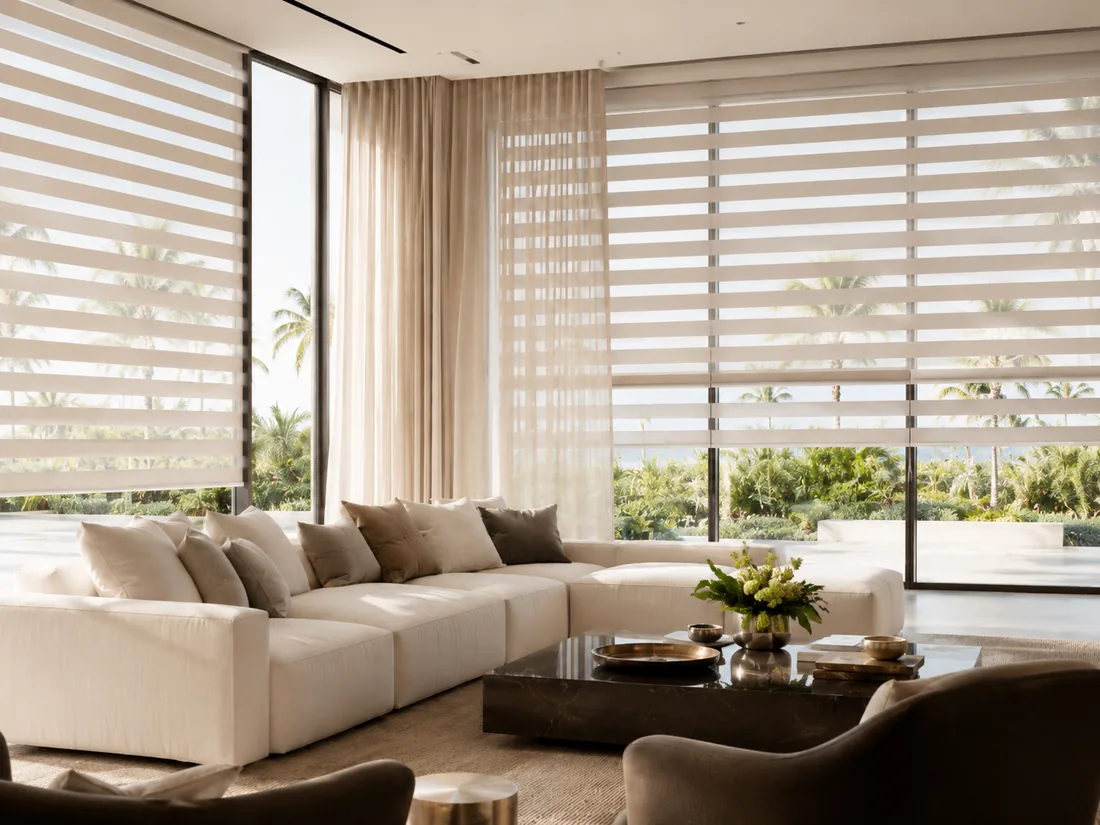
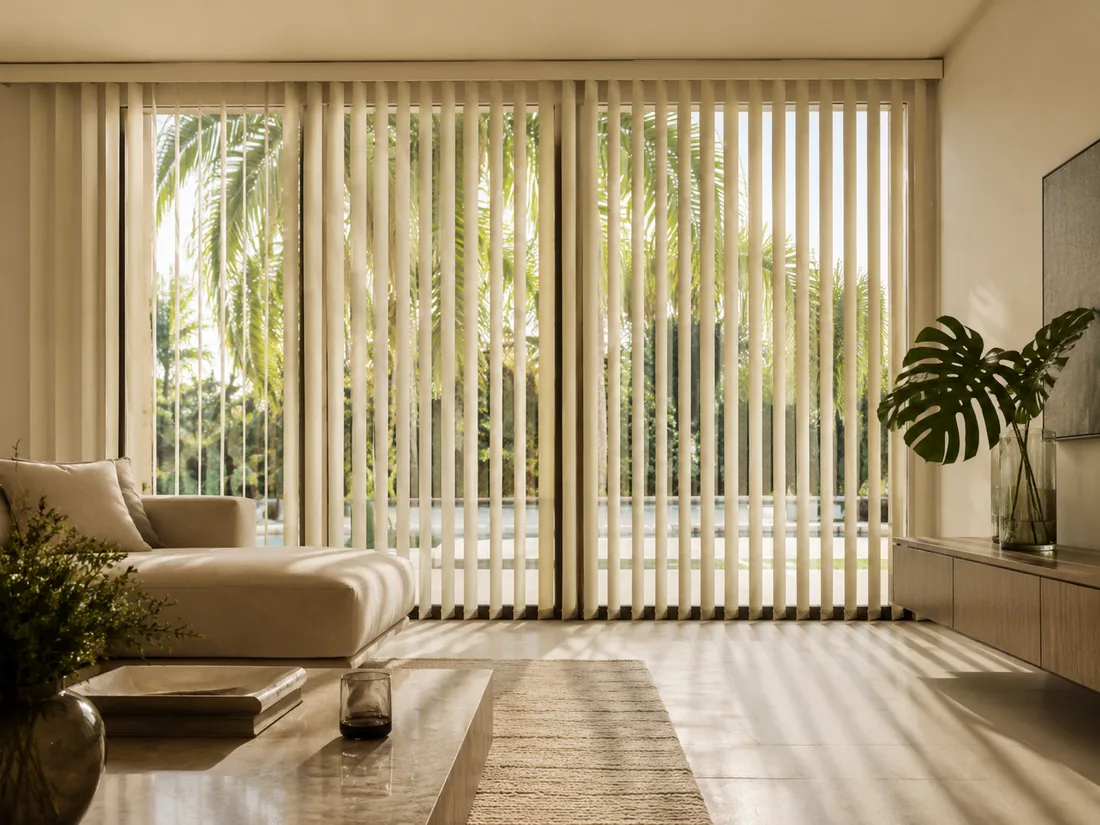
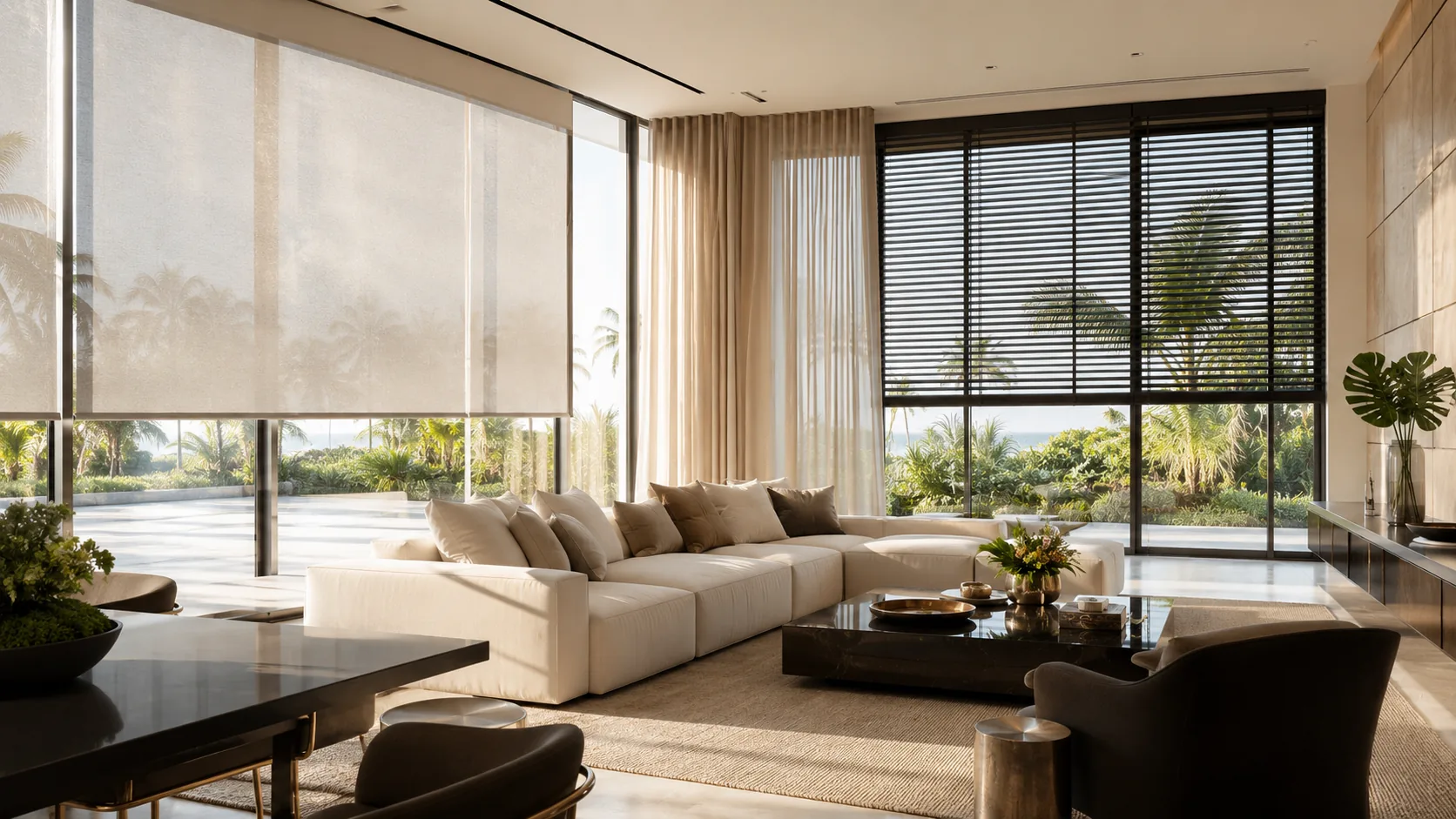
Roller shades offer the broadest range of solar, light-filtering, privacy, and blackout fabrics. Zebra shades provide more frequent adjustment between sheer and private positions. Blackout shades are designed for sleep and media spaces. Vertical blinds remain highly practical for sliding doors. Motorization improves daily use when multiple shades need to move together.
A premium result often uses different products in different rooms while coordinating color, fascia, and hardware.
Do not confuse glare control with blackout
A room can feel comfortable without being dark. Solar fabrics reduce brightness while keeping some outside connection. Blackout fabrics block light through the material but may still allow edge light. Selecting blackout where glare control was the actual goal can make a living area feel unnecessarily closed.
Define the objective in plain terms: preserve the view, stop screen glare, create nighttime privacy, darken the room, or reduce direct sun.
Use motorization strategically
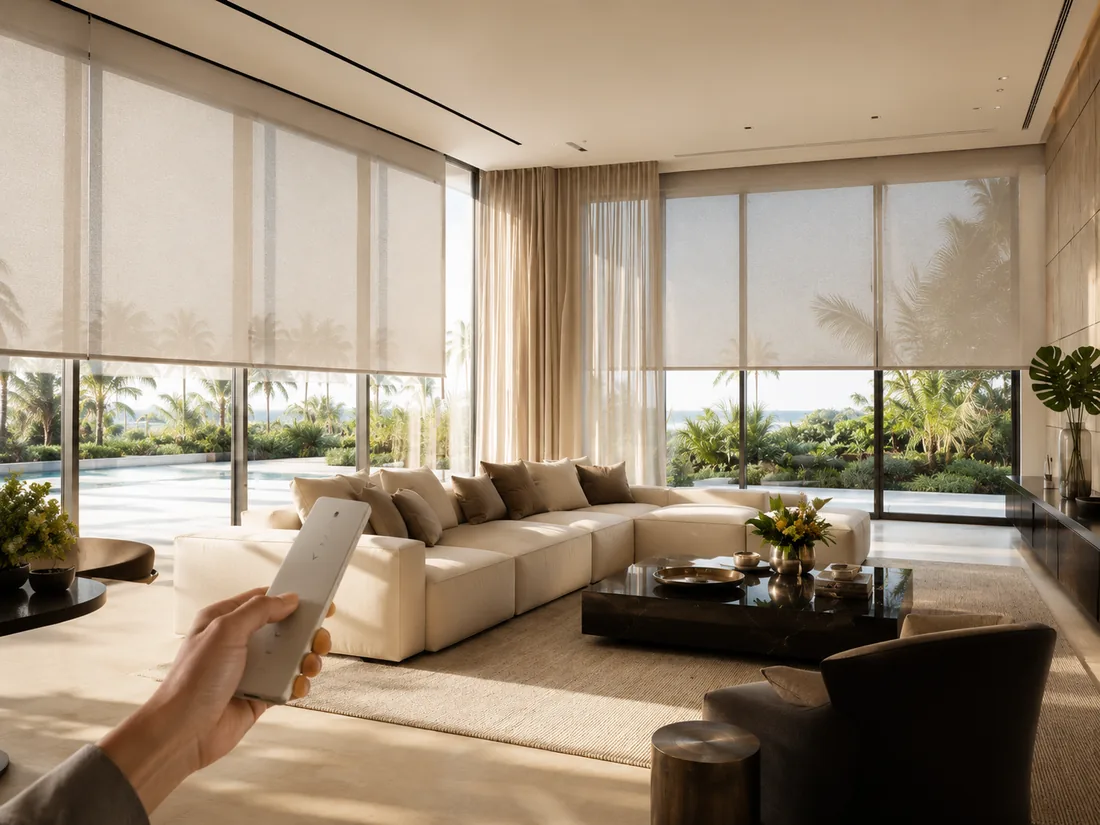
Motorization is most valuable when shades are tall, grouped, difficult to reach, or adjusted repeatedly. Scheduling west-facing shades to lower before peak afternoon sun can make the system useful even when no one remembers to operate it manually.
Battery systems simplify installation in existing homes. Wired power is worth considering during construction or major renovation.
Measure performance at the edges
The fabric is only one part of the result. Mounting depth, trim, wall clearance, gaps between adjacent shades, side overlap, and fascia all affect privacy and light control. Bedrooms and media rooms need more attention to edge conditions than casual living spaces.
Professional measurement prevents a high-quality fabric from being undermined by poor fit.
Build a room-by-room sunlight plan
Walk through the home at the times when discomfort is greatest. Record which windows receive direct sun, when glare reaches screens or seating, and whether the treatment must preserve a view. Note bedrooms that need darkness, street-facing rooms that need nighttime privacy, and sliding doors that require frequent passage. This simple inventory prevents one fabric from being forced into rooms with conflicting needs.
Group windows only when their conditions are genuinely similar. Two windows in the same room may face different directions or serve different functions. A coordinated project can still use matching hardware and color while changing fabric openness, opacity, or control method by elevation.
Evaluate samples under real conditions
A small fabric swatch can look different when expanded across a large window. Hold samples against the glass during direct sun, cloudy daylight, and evening interior lighting. View them from inside and outside where privacy matters. Darker solar fabrics often preserve the view more clearly, while lighter fabrics may reflect more interior brightness, but the complete specification should guide the choice.
Also inspect the fabric next to flooring, cabinetry, wall color, and upholstery. South Florida daylight can shift warm and cool tones throughout the day. The best sample is not simply the one that looks attractive on a table; it is the one that performs at the window without creating an unwanted color cast in the room.
Avoid the most common selection mistakes
Common mistakes include choosing solar fabric for nighttime privacy, expecting blackout fabric to eliminate every edge gap, ordering manual controls for windows that are difficult to reach, and ignoring the active panel on a sliding door. Another frequent problem is selecting a fabric before confirming whether the window has enough depth for the preferred inside mount and fascia.
A complete recommendation should connect fabric performance, mounting method, hardware, control position, and daily behavior. When those elements are decided together, the treatment is more likely to be used consistently, which is essential for glare control, comfort, privacy, and protection of interior finishes.
Product samples should be evaluated at the actual window, with the room lighting and privacy conditions considered before final selection.
Schedule a consultation →