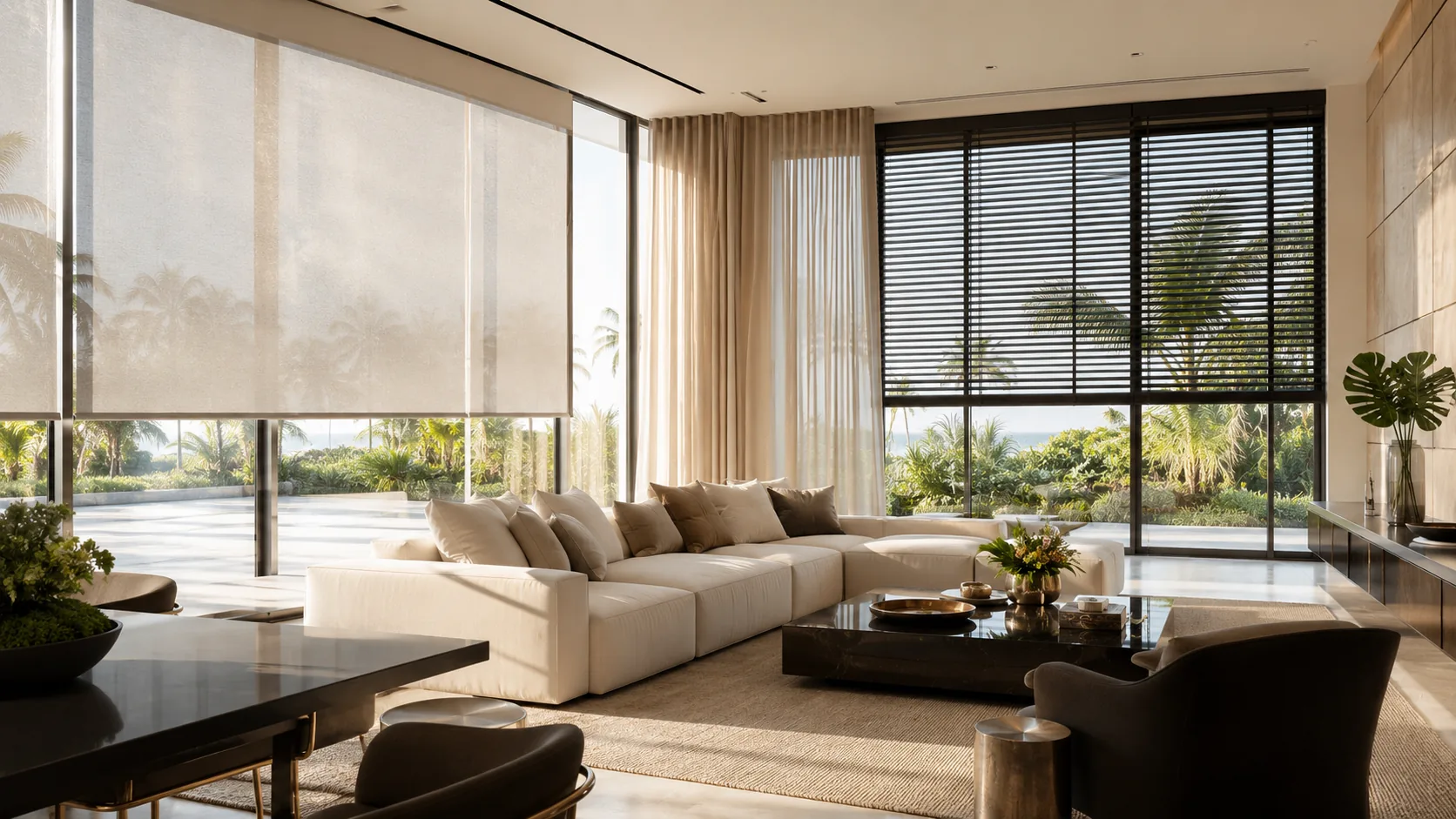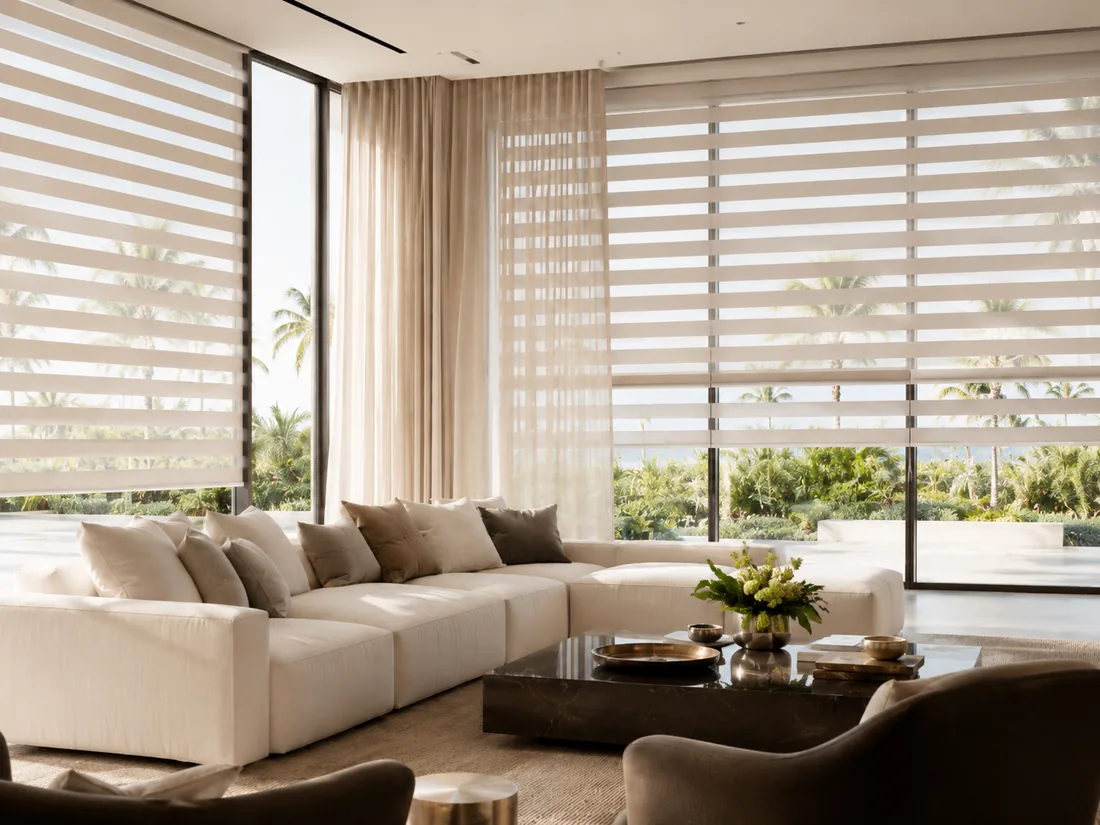
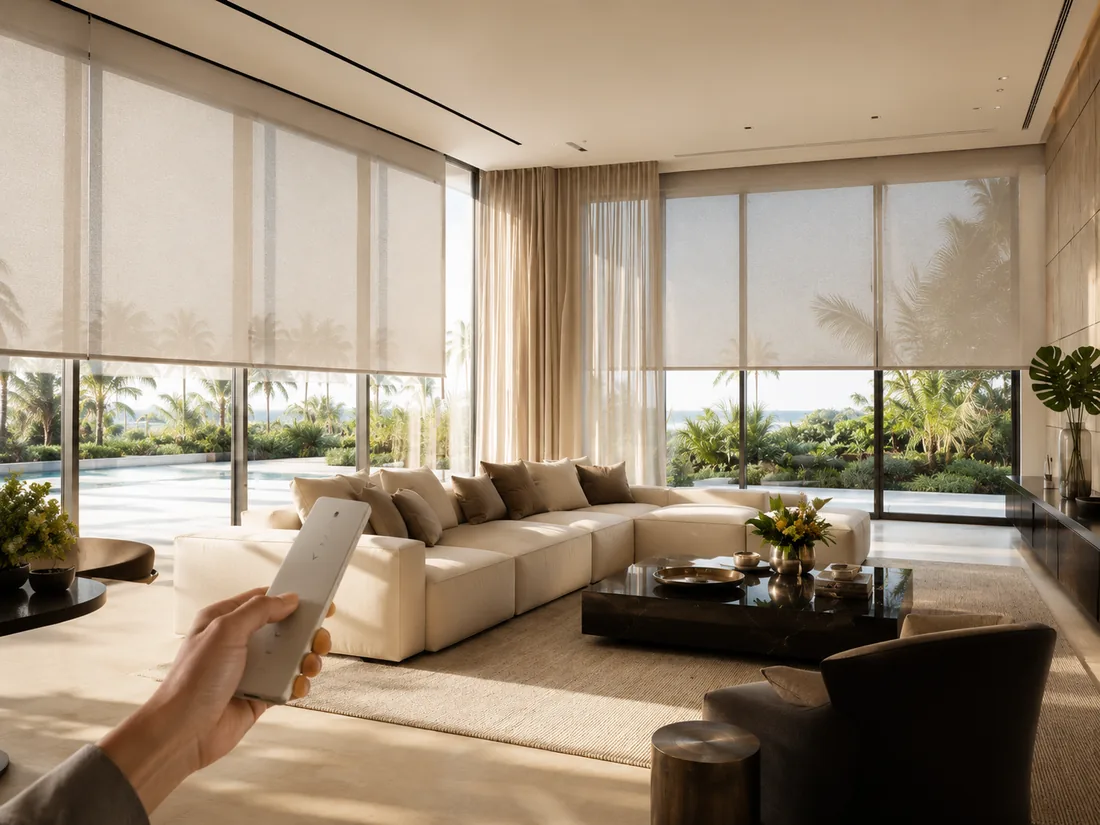
Large and hard-to-reach windows make manual shades inconvenient precisely where light control matters most. Motorization turns those windows into usable parts of the room, but a good system depends on more than choosing a remote control.
Start with shade size and weight
Large shades place more demand on the motor, tube, brackets, and mounting surface. Product limits should be checked for width, height, fabric weight, and installation orientation.
Dividing an opening into multiple shades may improve reliability and create more flexible control.
Choose battery or wired power
Rechargeable battery motors simplify installation in finished rooms and avoid opening walls. They require periodic charging and accessible placement.
Wired low-voltage or line-voltage systems are attractive for new construction, renovations, and large groups of shades. Wiring should be planned before finishes are complete.
Decide how the shades will be controlled
A handheld remote is simple and dependable. Wall controls feel permanent and intuitive. Apps add room grouping and remote access. Smart-home integration can connect shades with scenes, voice control, lighting, or schedules.
The most sophisticated option is not automatically the best. Controls should match the people who will use the room every day.
Plan groups and scenes
Grouping allows several shades to move as one, while individual control preserves flexibility. A living room might use an all-open scene, a television scene, and a late-afternoon glare scene.
Clear naming and logical grouping matter when many shades are added to an app.
Protect alignment and appearance
Adjacent shades should start and stop consistently. Fabric roll direction, fascia, bracket placement, and small window differences can affect visual alignment.
A premium installation tests each shade, confirms limits, labels controls, and verifies that grouped movements behave as expected.
Consider service and future access
Batteries, chargers, motors, and control hubs should remain accessible. Record product information and keep charging accessories in a known location.
The system should be designed so one failed component does not require disturbing finished walls or unrelated shades.
Plan power before the shades are ordered
For battery systems, confirm where charging cables can reach and whether furniture will block access to the motor head. For wired systems, document transformer locations, wire paths, outlet or low-voltage requirements, and access panels. These details should be resolved before fabrication because motor side and cable exit can affect the final configuration.
On renovation projects, photographs and labeled drawings help electricians, installers, designers, and homeowners coordinate. A clean shade installation can still be undermined by an exposed power supply or inaccessible charging port.
Design controls for actual users
Place wall controls where people naturally enter the room. Keep essential functions available without requiring a phone. For guest rooms and shared offices, a clearly labeled remote or wall switch is usually easier than expecting every user to install an app.
Smart-home scenes should have plain names such as Morning, Afternoon Glare, Privacy, and All Open. Complex automation that nobody understands is less useful than a smaller set of predictable controls.
Commission the system after installation
Each shade should be tested individually and in every programmed group. Verify upper and lower limits, direction, alignment, obstacle clearance, remote labels, app access, charging instructions, and any schedules. The owner should know how to stop movement, override automation, and identify a shade that needs service.
Keep model numbers, motor information, control documentation, and warranty records together. Large motorized projects are easier to maintain when the system is documented at completion rather than reconstructed years later.
Product samples should be evaluated at the actual window, with the room lighting and privacy conditions considered before final selection.
Schedule a consultation →