
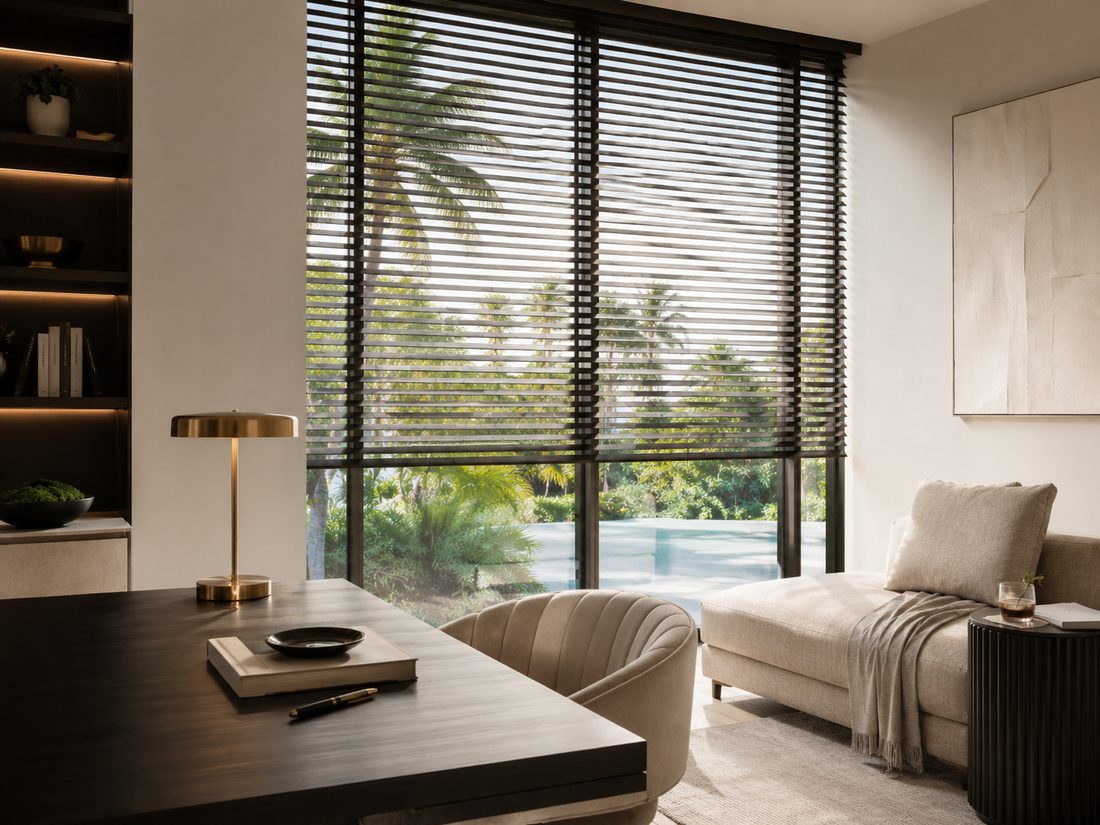
Horizontal blinds controlling light in a South Florida interior
Custom Window Treatments

Custom Horizontal Blinds in South Florida

Horizontal blinds use adjustable slats to control light direction, visibility, and privacy. Their familiar operation and crisp structure make them a dependable solution for bedrooms, offices, kitchens, and smaller windows.

Designed Around the Room

Why Choose Horizontal Blinds?

Horizontal blinds work especially well on standard-size windows where the user wants quick tilt adjustment. They pair naturally with traditional, transitional, and office interiors.

Moisture-resistant materials are usually preferable near kitchens, bathrooms, laundry areas, and coastal environments. Faux-wood and composite options can deliver a warm look with less sensitivity to humidity than natural wood.

Key benefits

  • Fine control over light direction and privacy
  • Clean fit for individual windows
  • Wood-look, faux-wood, and other finish options
  • Practical for residential and commercial interiors
  • Custom sizing for a more finished appearance
Horizontal Blind Buying Guide

Slat size, material, and privacy details that matter in Florida homes.

Which slat size should you choose?

Horizontal blinds come in common slat widths of 1 inch (mini blinds), 2 inches, and 2.5 inches. Wider slats give a clearer view when open and a more substantial, shutter-like look. Narrow slats suit small windows and shallow frames where a wide slat would not clear the window crank or trim.

Faux wood, real wood, or aluminum?

Faux wood (PVC or composite) handles humidity well, so it is the usual choice for kitchens, bathrooms, and laundry rooms in Florida. Real wood is lighter in weight and warmer in appearance but is better kept out of very humid rooms. Aluminum is light and affordable and fits shallow frames.

How do you get better privacy from horizontal blinds?

Tilt the slats up so the rounded side faces the room to limit the view in from outside. For the most privacy and light control, ask about routeless slats, which do not have the small holes for lift cords that let pinpoints of light through.

Are corded horizontal blinds safe?

Since December 15, 2018, the U.S. safety standard ANSI/WCMA A100.1-2018 has required stock blinds to be cordless or have short or inaccessible cords, and it made a tilt wand the default instead of a tilt cord. For custom blinds in homes with children or pets, choose cordless lift with a wand tilt.

How do you clean horizontal blinds?

Close the slats and dust with a microfiber cloth or vacuum brush, then repeat with the slats turned the other way. Faux wood and aluminum can be wiped with a damp cloth; real wood should only be dusted or wiped with a barely damp cloth.

Helpful Answers

Horizontal Blinds Questions

Are faux-wood blinds better for humid rooms?

They are generally more resistant to moisture and temperature changes than natural wood, making them a practical option for many South Florida rooms.

Can horizontal blinds be cordless?

Yes. Cordless lift systems improve the appearance and reduce loose cords.

Do horizontal blinds work on doors?

They can be installed on some doors with appropriate hold-down hardware, although the exact solution depends on the door construction and how frequently it moves.

Free Consultation

Get a Custom Horizontal Blinds Consultation

Call or send a consultation request. We will help narrow the product, fabric, operation, and fit for your space.