Roller shades and zebra shades share a compact profile, but they solve light and privacy in different ways. The better choice depends on whether the room needs fabric versatility, layered visual texture, blackout capability, or frequent adjustment throughout the day.
How roller shades work
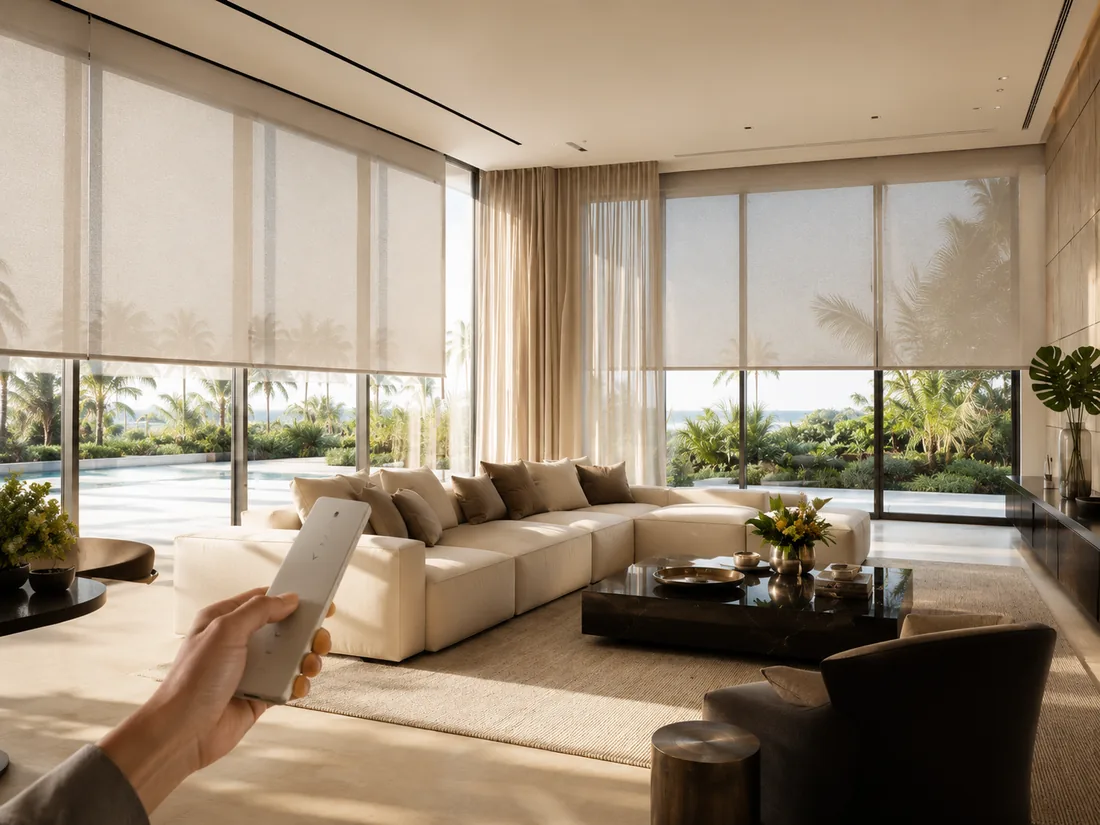
A roller shade uses one continuous fabric panel that raises around a tube. The fabric determines the performance: solar, sheer, light-filtering, privacy, room-darkening, or blackout.
Because the construction is simple, roller shades can produce a very clean architectural look and can cover a wide range of window sizes.
How zebra shades work
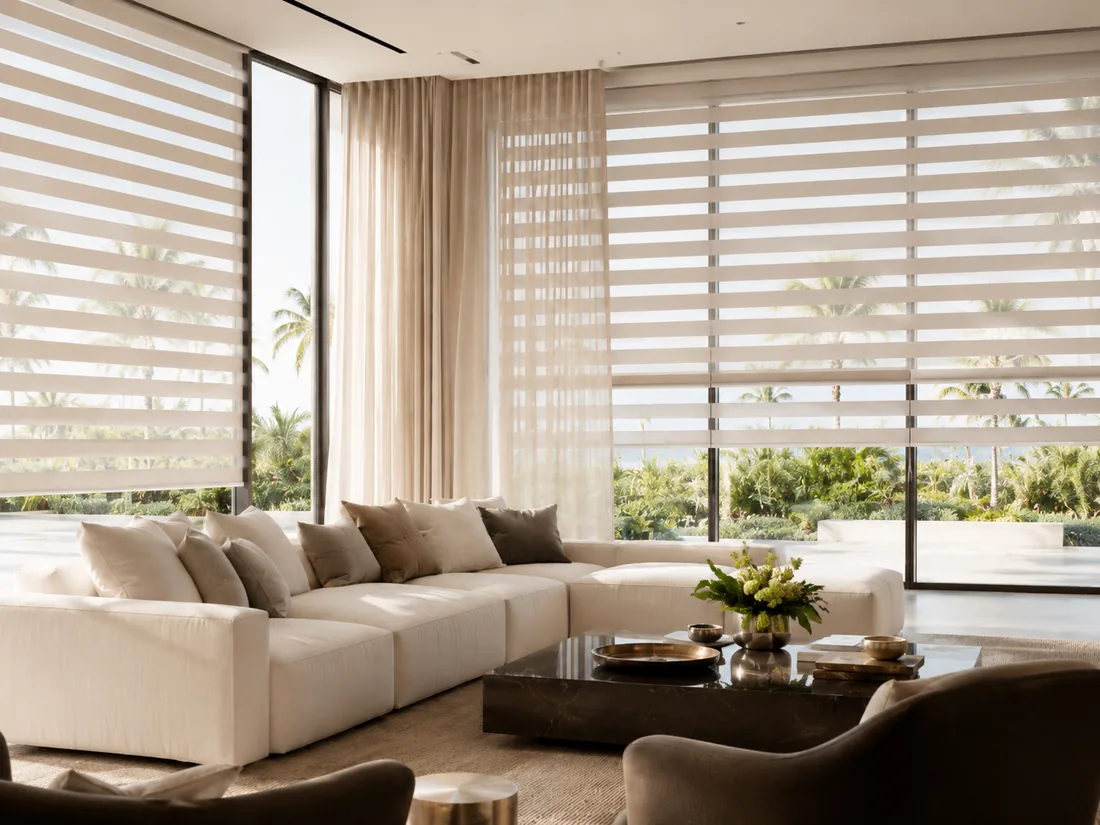
A zebra shade uses a continuous loop of fabric with alternating sheer and solid horizontal bands. Moving the fabric aligns or offsets the bands, changing the balance between filtered light and privacy.
The striped layering becomes part of the room design, which is why zebra shades are often chosen as a visible feature rather than a quiet background product.
Light control and privacy
Roller shades change light primarily by moving up or down. Zebra shades can remain lowered while the bands shift, giving more adjustment without fully exposing the window.
For nighttime privacy, zebra bands must overlap correctly. A privacy roller fabric is more visually uniform when fully lowered.
Blackout performance
Blackout roller fabrics are the stronger choice when sleep or media viewing is the priority. Zebra shades generally allow some light through their layered construction and edge conditions.
A dual roller system can combine a solar shade for daytime with a blackout shade for night.
Maintenance and durability
Both products are relatively easy to maintain when handled correctly. Roller shades have fewer visual layers. Zebra fabric should be kept aligned and cleaned gently to protect the sheer sections.
The quality of the tube, brackets, clutch or motor, fabric, and installation matters more than the category name alone.
Which rooms favor each product
Choose roller shades for bedrooms, media rooms, minimalist interiors, solar control, and broad fabric flexibility. Choose zebra shades for living rooms, dining rooms, offices, and spaces where adjustable filtered light and visual texture are priorities.
Across a whole home, the products can be coordinated rather than treated as mutually exclusive.
Compare the products in open and closed positions
Do not compare only fabric samples. Consider how each product looks when fully raised, partially lowered, and completely closed. A roller shade nearly disappears into its tube or fascia when open. A zebra shade retains its layered fabric loop and horizontal pattern when lowered, even in its more open position. That visible structure can either strengthen the room design or compete with other patterns.
For windows that frame an important view, note the height of the headrail and how much fabric remains at the top. For windows near cabinetry or trim, verify that the housing and controls do not interfere with doors, handles, or built-ins.
Use a decision matrix by room
In a primary bedroom, blackout capability and edge coverage usually favor a roller shade. In a living room where filtered light changes throughout the day, zebra shades may provide more useful adjustment. In a home office, the decision depends on whether the priority is monitor glare, privacy, or a decorative background for video calls.
Sliding doors, very wide windows, and humid rooms introduce additional constraints. Product size limits, fabric stability, access patterns, and maintenance should be reviewed before appearance. A product that is elegant on a standard window may be less practical across a heavily used patio opening.
Coordinate mixed products across the home
A home does not need to use one product everywhere. Roller shades can handle bedrooms and high-glare windows while zebra shades serve living and dining spaces. Coordination can come from consistent fascia color, bottom rails, motor controls, and a shared neutral fabric palette rather than identical construction.
This mixed approach often produces better performance and a more intentional design. It also allows motorization to be concentrated where it creates real value instead of adding cost to windows that are easy to operate manually.
Product samples should be evaluated at the actual window, with the room lighting and privacy conditions considered before final selection.
Schedule a consultation →