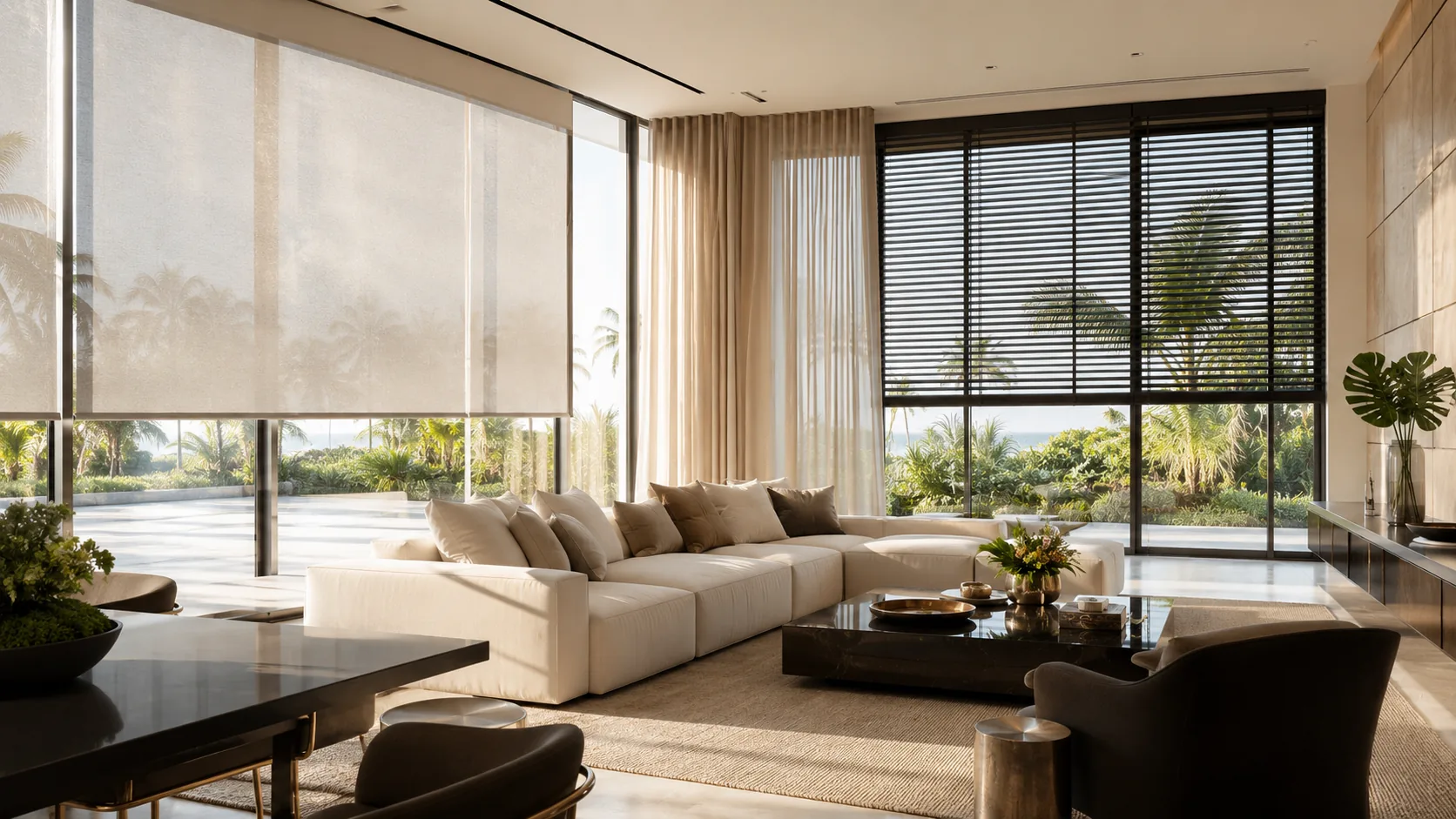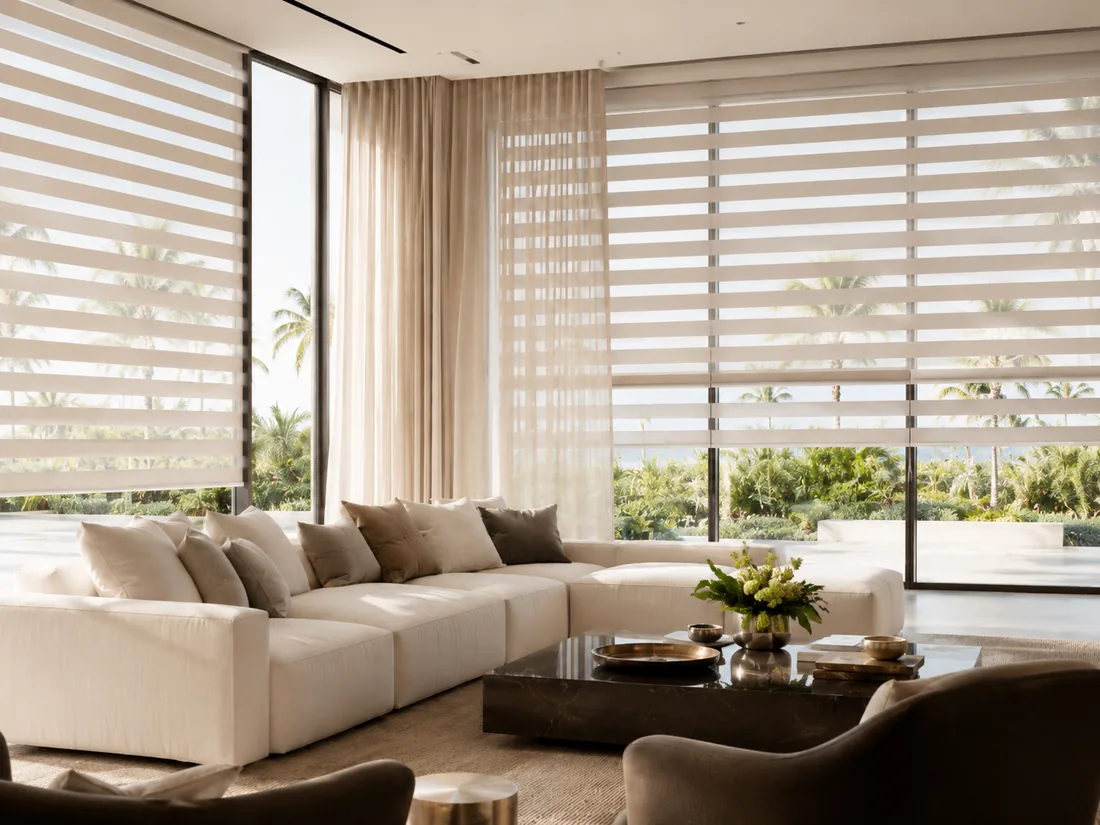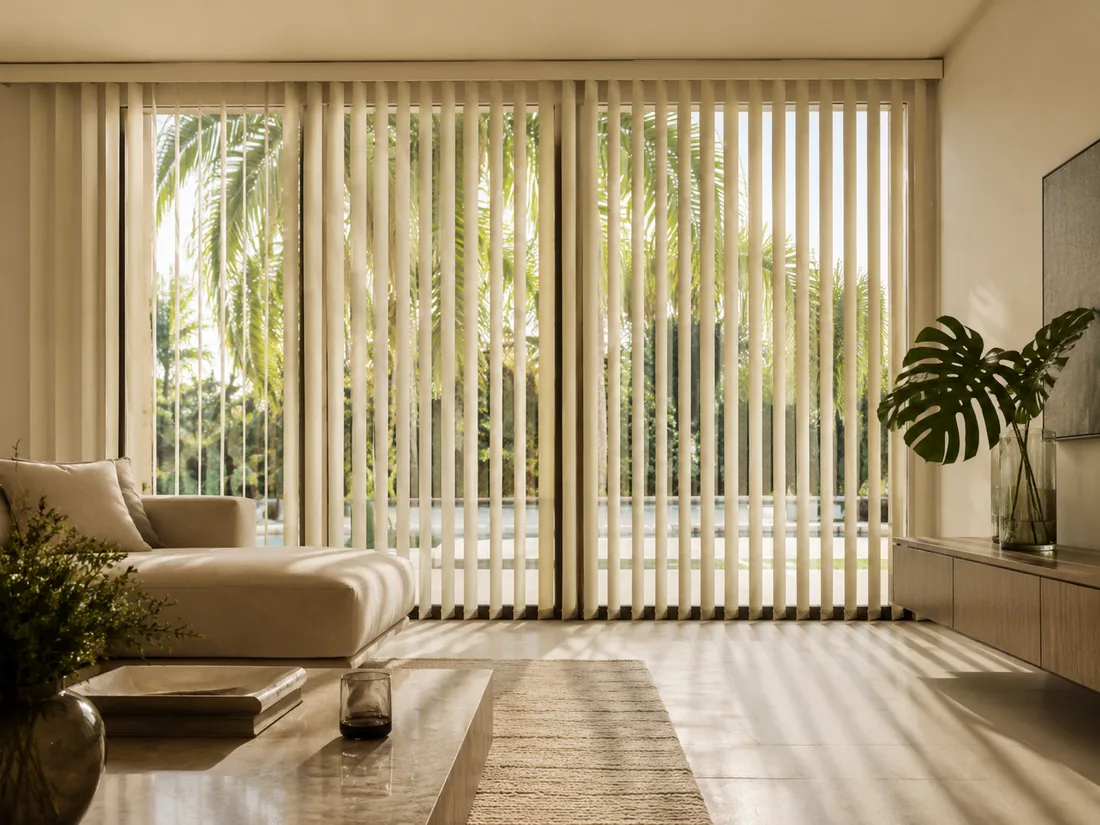
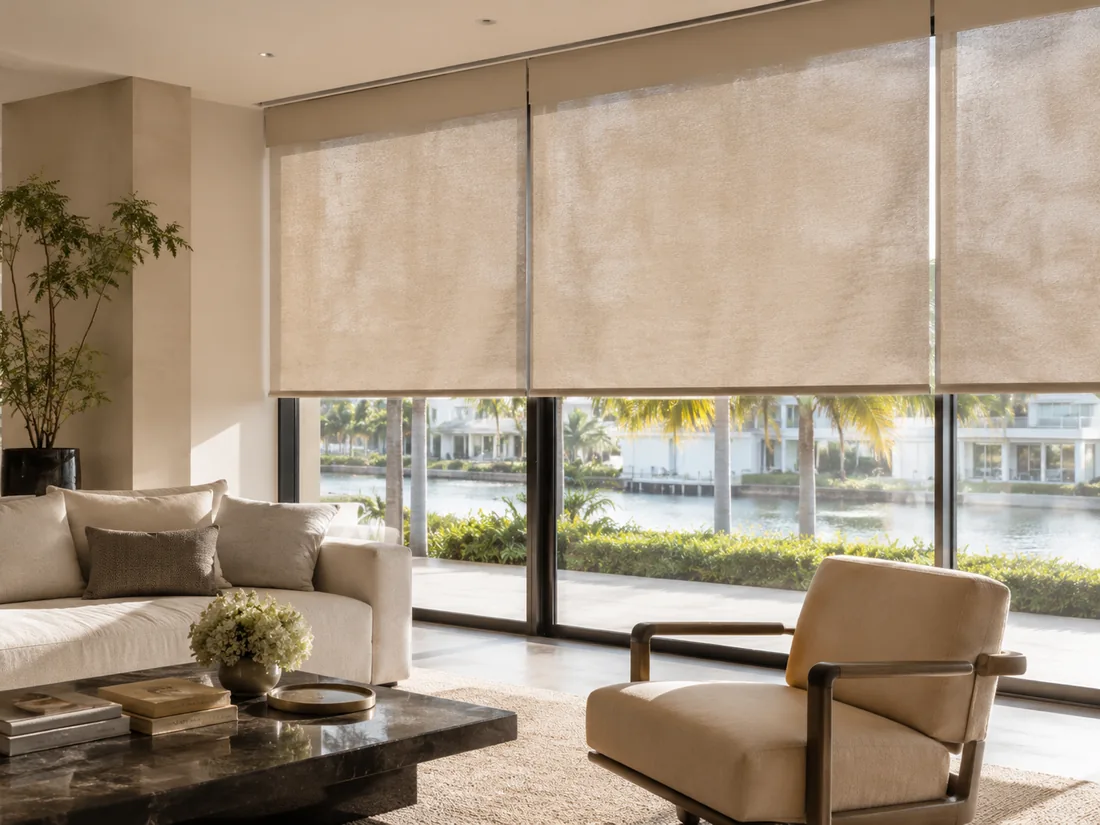
Fabric labels are often treated as simple categories, but the experience in a room depends on fabric density, color, mounting gaps, exterior light, and interior lighting. Defining the desired result is more reliable than choosing from a label alone.
Light-filtering shades
Light-filtering fabrics soften daylight and reduce direct visibility while allowing the room to remain bright. They are common in living rooms, kitchens, dining areas, and offices.
Privacy varies by fabric. A pale silhouette may still be visible at night when interior lights are on.
Privacy fabrics
Privacy fabrics are designed to block direct views more strongly while still allowing some diffused light. They are useful in bathrooms, street-facing rooms, and spaces where a solar screen would remain too transparent.
They do not create the darkness of blackout fabric.
Room-darkening fabrics
Room-darkening is a broad term for fabrics that reduce a significant amount of light without necessarily meeting a blackout construction standard.
This category can be sufficient for guest rooms and casual media spaces where complete darkness is unnecessary.
Blackout fabrics
Blackout material blocks light through the fabric. Edge gaps remain unless the mounting and hardware are designed to address them.
Bedrooms, nurseries, media rooms, and shift-work sleep spaces benefit most from blackout performance.
Solar fabrics
Solar shades reduce glare and ultraviolet exposure while preserving some outside view. Their openness affects visibility and light transmission.
They are strongest for daytime performance. At night, illuminated interiors may be visible from outside.
Build a room-by-room schedule
A whole home rarely needs one fabric. List each room, window direction, privacy requirement, desired view, and darkness goal. That schedule creates a rational basis for product selection.
Hardware and colors can still be coordinated across different performance fabrics.
Test privacy from both sides of the glass
Daytime privacy can reverse after sunset. During the day, a brighter exterior and darker interior may make it difficult to see inside through solar or sheer materials. At night, interior lighting can make occupants and furnishings visible from outside. Evaluate samples with the room lights on and view the window from the exterior whenever possible.
Street level rooms, bathrooms, bedrooms, and windows facing close neighbors need a stricter privacy standard than upper-floor living spaces with distant views.
Account for color and mounting gaps
Fabric color affects the appearance of transmitted light and the clarity of the view. Mounting method affects side gaps, top light, and the amount of trim covered. Two shades made from the same fabric can perform differently if one is installed inside a shallow frame and the other overlaps the opening.
Do not approve a fabric without approving the mount. The complete assembly determines the room experience.
Use dual layers when one fabric cannot do both jobs
A dual roller system can pair a solar or light-filtering shade for daytime with a blackout or privacy shade for night. Drapery can provide the second layer where a softer decorative finish is preferred. Layering increases depth and cost, but it resolves conflicts that one fabric cannot.
Before choosing two layers, verify mounting space, stack size, fascia dimensions, handle clearance, and how each layer will be controlled. Motorization may simplify operation when both shades are used every day.
Product samples should be evaluated at the actual window, with the room lighting and privacy conditions considered before final selection.
Schedule a consultation →