Sun exposure changes fabrics, flooring, artwork, cabinetry, and furniture over time. Window treatments cannot make interiors immune to fading, but consistent light management can reduce direct exposure and slow uneven color change.
Identify the highest-exposure windows
West and east exposures often create concentrated periods of direct sun. Reflections from water and neighboring buildings can intensify exposure in unexpected locations.
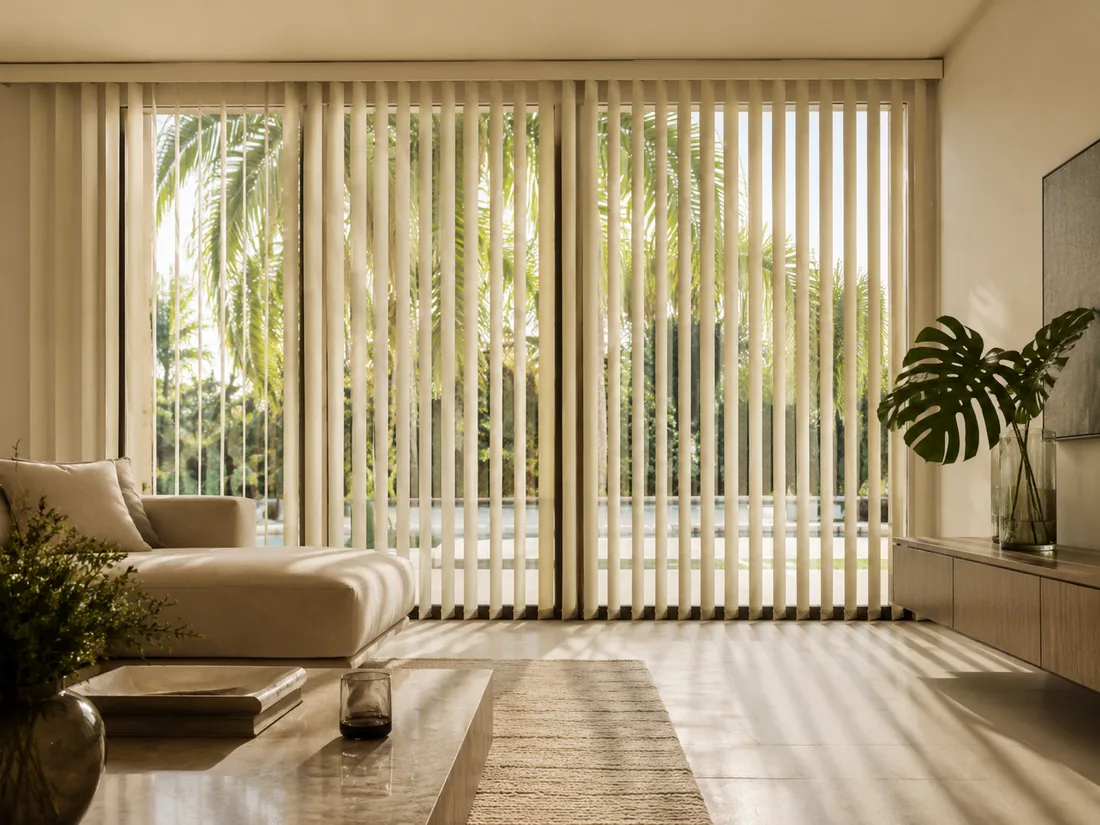
Watch where sun patches move across floors and furniture during the day.
Use solar shades for occupied daytime rooms
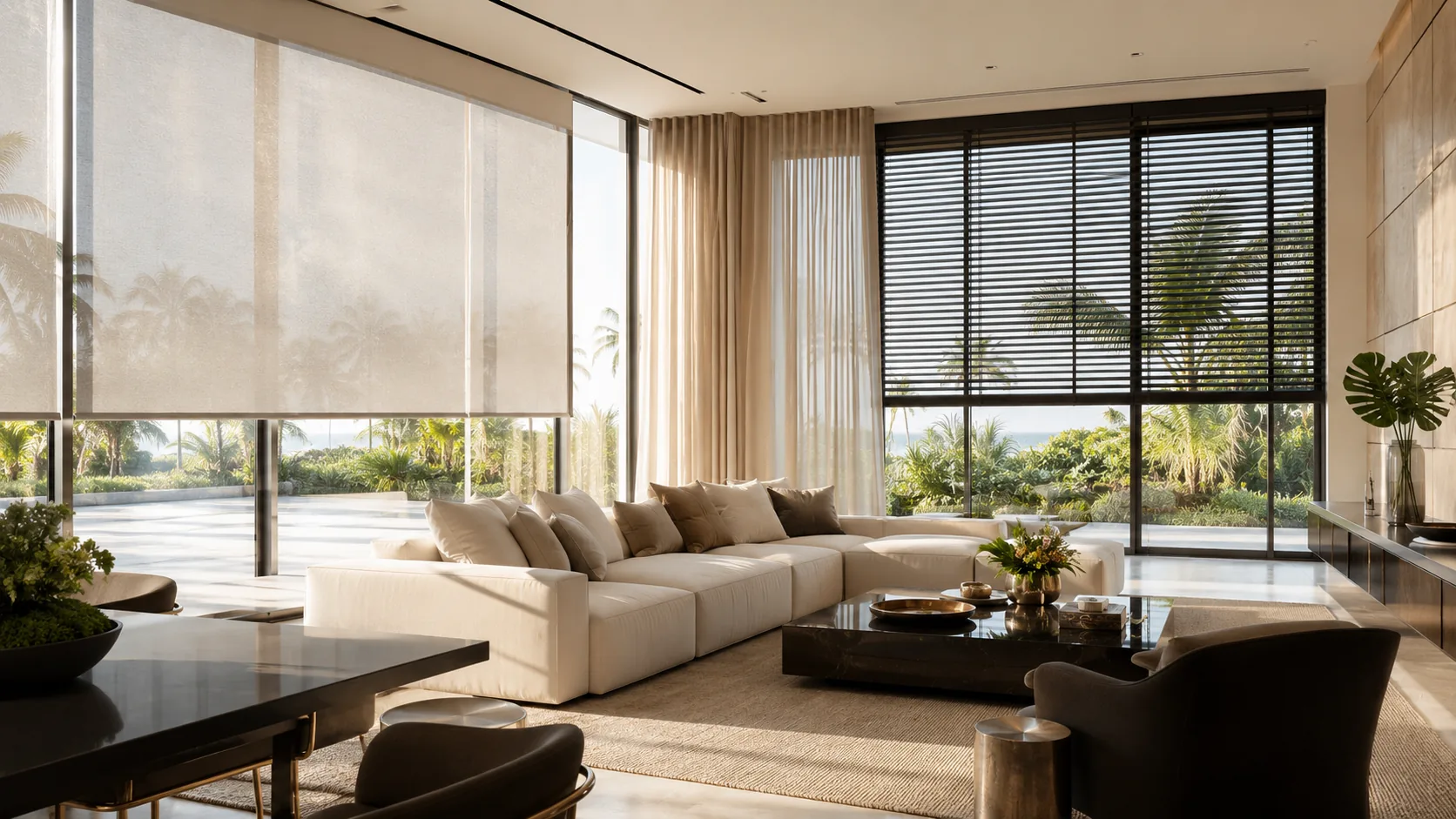
Solar shades reduce glare and ultraviolet transmission while retaining some outside view. This makes them practical for living rooms and offices that should remain bright.
The selected openness and fabric specification determine the balance between protection and view.
Use opacity where the view is less important
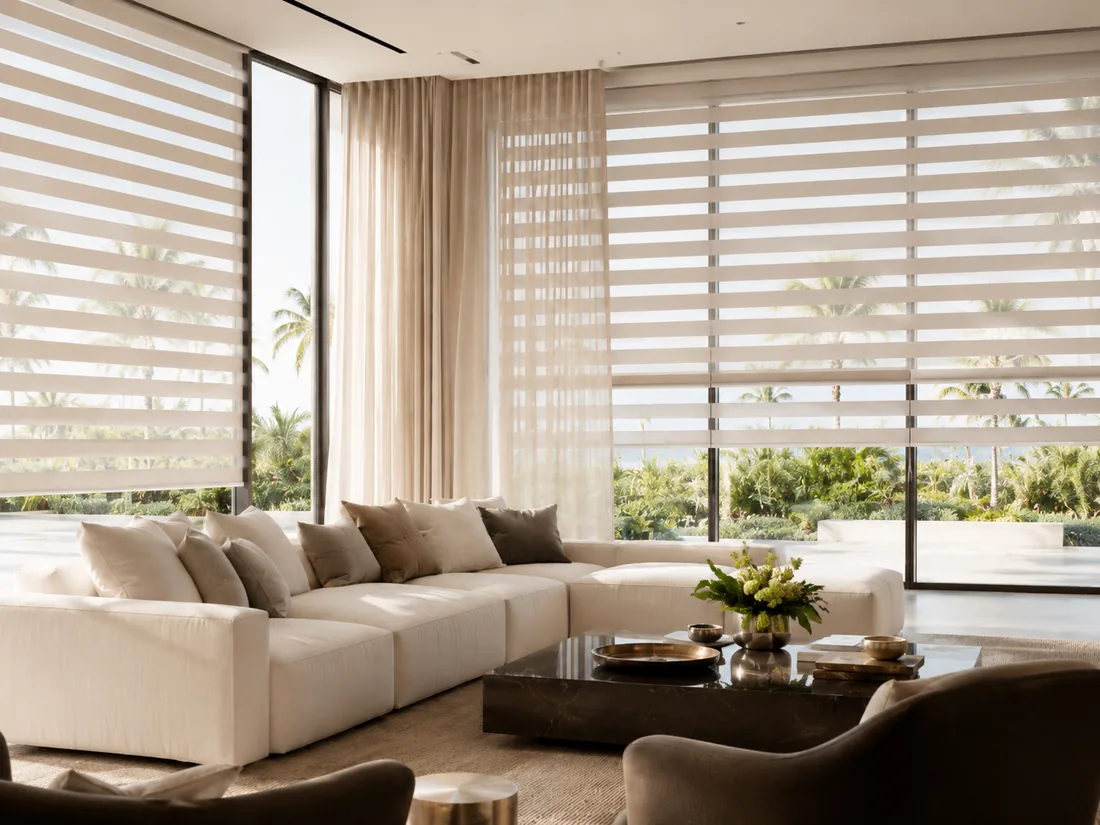
Privacy or blackout roller shades block more visible light when lowered. They can be used during the hours of highest exposure even if they remain open at other times.
Bedrooms and formal rooms may tolerate greater opacity than primary living areas.
Schedule shade movement
Motorized shades can lower before predictable direct sun reaches a room and reopen later. Automation makes protection more consistent than relying on memory.
Schedules should be adjusted seasonally as the sun angle changes.
Rotate and plan furnishings
Window treatments work best alongside practical room planning. Rotate rugs when possible, avoid placing sensitive artwork in direct sun, and understand that exposed and covered sections of the same material may age differently.
Protective films, glazing, and treatment fabrics can be considered together for valuable interiors.
Do not rely on appearance alone
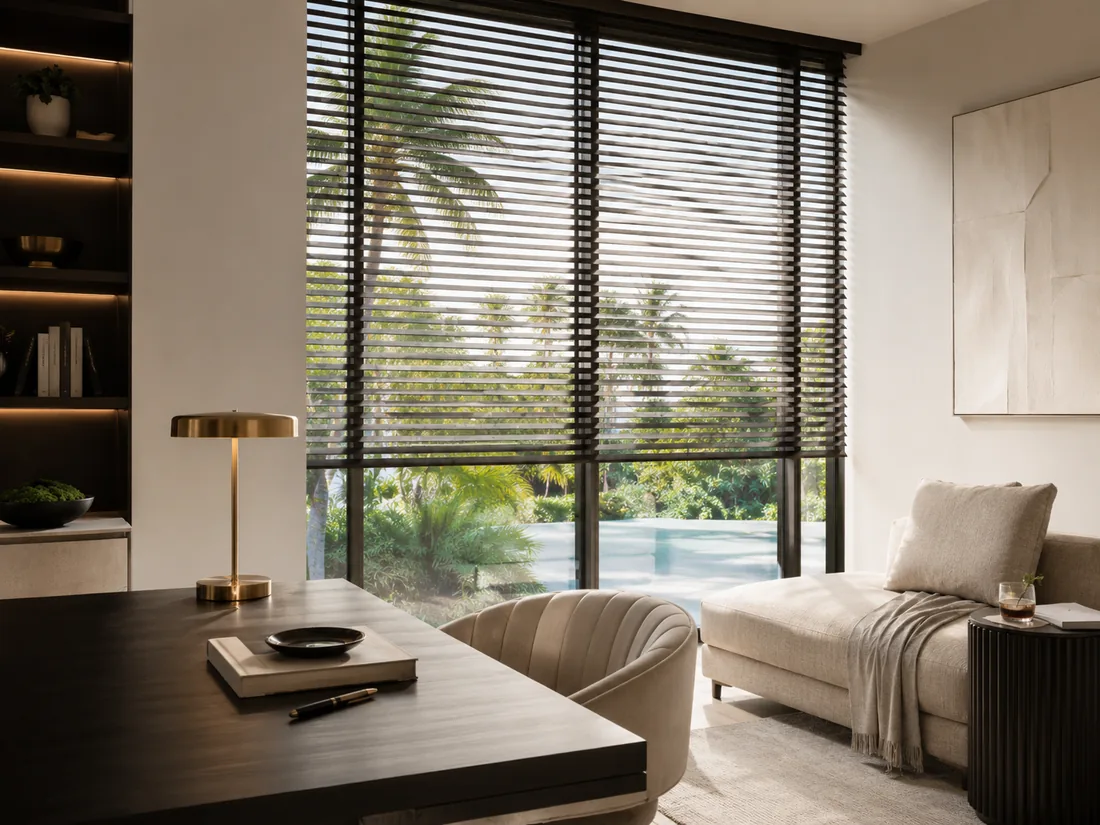
A dark fabric does not automatically provide the best ultraviolet performance, and a room that feels dim can still receive damaging exposure. Review product specifications and choose based on the actual goal.
Consistent operation often matters as much as the product itself.
Create an exposure map
Photograph the room at several times on a clear day and mark where direct sun reaches flooring, rugs, art, leather, wood, and upholstery. Repeat during a different season because the sun angle changes. The highest-risk zones are often narrower and more predictable than the entire room.
This map helps determine which shades need tighter solar control, which can preserve a more open view, and when automated movement would provide the greatest benefit.
Coordinate shades with glazing and interior planning
Window film, laminated or coated glass, exterior overhangs, shade fabric, and furniture placement can all contribute to exposure management. These measures should be evaluated together. Adding a shade does not correct a valuable painting placed permanently in a direct sun path if the shade is rarely lowered.
Ask manufacturers or suppliers for performance data where valuable finishes are involved. Visual darkness alone is not a reliable measure of ultraviolet reduction.
Build a routine that people will follow
A protection plan works only when the shades are used. Manual shades should be easy to reach and simple to operate. Motorized shades should use schedules that match actual exposure rather than closing every window all day. Owners should know how to override the schedule for weather, guests, or seasonal changes.
Review the routine after several weeks. Adjust timing if direct sun still reaches sensitive areas or if the room feels unnecessarily closed. Consistent moderate control is usually more useful than an aggressive plan that occupants disable.
Product samples should be evaluated at the actual window, with the room lighting and privacy conditions considered before final selection.
Schedule a consultation →