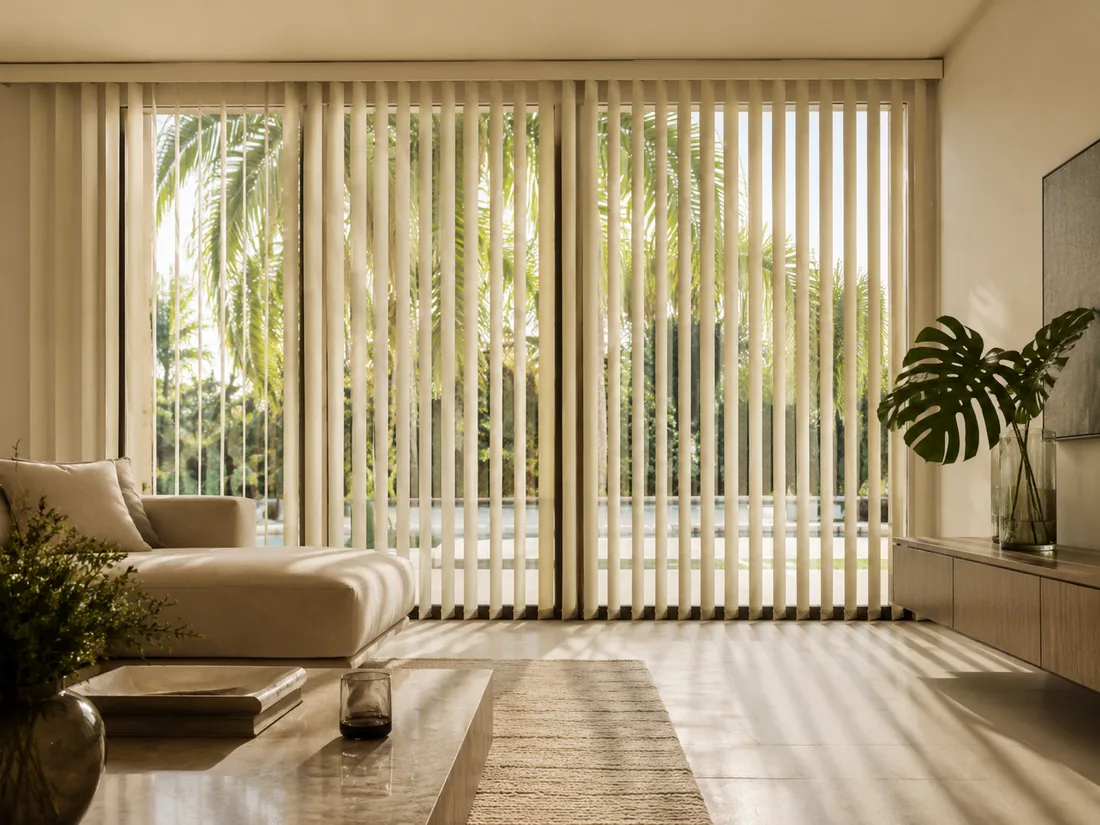

Condo window treatments must work inside the unit while respecting building rules, exterior appearance, installation access, and the realities of broad glass. Planning should begin before ordering because building restrictions can affect color, drilling, work hours, elevators, and contractor access.
Check association and building requirements
Some buildings require a consistent exterior-facing color, limit visible hardware, control drilling into concrete, or require contractor documentation. Confirm the rules before finalizing fabric and mounting details.
Delivery reservations, service elevators, parking, and permitted work hours can also affect installation.
Prioritize glare without losing the view
Solar roller shades are popular in condos because they reduce brightness while preserving some connection to the exterior. The openness factor should be chosen by orientation and room use.
A fabric that works on a north-facing window may be too open for direct west sun.
Plan balcony and sliding-door access
Large balcony doors need a treatment that supports normal traffic. Vertical blinds, panel systems, or multiple roller shades can work, but each handles access differently.
Furniture placement and the active door panel should be considered before selecting draw direction or shade divisions.
Use motorization where it adds daily value
Motorization is useful for tall glass, multiple windows, and shades behind furniture. Battery power can avoid invasive wiring in finished units.
App and schedule features are especially practical for absentee owners who want shades to move while the unit is unoccupied.
Coordinate the whole elevation
Condo glass often spans several rooms or creates long visible lines. Matching fascia heights, roll direction, fabric tone, and bottom rails produces a more intentional result.
Even when bedrooms use blackout and living areas use solar fabric, hardware can be coordinated.
Prepare the installation area
Clear access to windows, move fragile items, protect floors, and confirm where installers may stage materials. Concrete ceilings and walls may require different anchors and tools than standard residential framing.
A pre-installation review prevents last-minute conflicts with sprinklers, soffits, drapery pockets, and sliding-door handles.
Document the building requirements
Before ordering, collect written rules covering exterior-facing color, drilling, insurance certificates, installer registration, work hours, parking, freight elevators, disposal, and protection of common areas. Verbal approval from a neighbor or front desk is not a substitute for current building requirements.
Provide the installer with the unit number, loading instructions, contact names, and access schedule in advance. Good logistics reduce delays and protect the installation day from avoidable building conflicts.
Coordinate with glass, tint, and hurricane systems
Condo windows may include impact glass, aftermarket film, deep mullions, removable storm components, or restrictions on attaching to frames. The mounting plan should avoid damaging glazing systems or interfering with required inspection and maintenance access.
If window replacement or film installation is planned, complete the sequence in the correct order. Re-measure after structural work because even small changes in trim or ceiling pockets can affect custom shade dimensions.
Plan for absentee ownership and guests
Seasonal residents often benefit from simple labeled controls, scheduled privacy, and a documented charging routine for battery motors. Guests and property managers should be able to operate essential shades without access to the owner's personal smart-home account.
Keep product records, remote labels, and service contacts in the unit. A concise operating sheet can prevent accidental damage and make future maintenance easier for owners who are not present year-round.
Product samples should be evaluated at the actual window, with the room lighting and privacy conditions considered before final selection.
Schedule a consultation →